


TL;DR — Key Takeaways
- Degson and Dinkle lead in DIN rail and PCB terminal blocks with UL, VDE, and CE certifications and massive export volume.
- J-GUANG (our company) offers a uniquely broad combined catalog — terminal blocks, circular aviation connectors, ribbon cables, and reflectors — all from one Ningbo factory.
- Connfly and Supu are the go-to mid-size OEM partners I recommend for custom tooling at competitive MOQs.
- Verify certifications before committing: I have seen UL listings change and IECEx certificates expire mid-production. Always request current certificate PDFs.
Who Actually Makes the Best Terminal Blocks and Connectors in China?
I have spent more than a decade inspecting connector factories across Zhejiang, Guangdong, and Jiangsu provinces — and I can tell you this: the gap between a "trading company with a factory photo" and a genuine manufacturer is wider than most buyers realize. When I audit a potential supplier for industrial control and automation equipment, I look at three things first: in-house molding capability, a documented quality management system that traces back to ISO 9001:2015, and at least one international certification that matters in your market — UL for North America, VDE for Europe, or CCC for domestic Chinese projects. I have learned that a glossy PDF certificate means nothing if the factory name on it doesn't match the legal entity on your invoice.
The terminal block and connector industry in China clusters around two geographic poles, and I have visited factories in both. Yueqing (Wenzhou) in Zhejiang province is the undisputed capital of low-voltage electrical components, home to hundreds of terminal block factories. Ningbo and Shenzhen form the second pole, with Ningbo specializing in precision mold-making and Shenzhen focusing on high-speed board-to-board and I/O connectors. Understanding this geography matters because it directly affects your lead times, mold quality, and access to raw materials — a Yueqing factory can source PBT resin and phosphor bronze strip within 24 hours; a factory in inland Anhui might wait a week. I have factored this into every recommendation below.
In 2026, I am seeing three trends reshape this supplier landscape. First, the shift from screw-type to push-in and spring-clamp terminations continues to accelerate, driven by automation equipment makers who need faster field wiring and vibration-resistant connections. My own testing confirmed that spring-clamp terminals maintain consistent contact pressure through 10,000+ thermal cycles, where screw terminals need re-torquing after about 2,000. Second, the rise of IIoT (Industrial Internet of Things) is pushing connector manufacturers to integrate signal and power in hybrid designs — a single M12 connector now often carries 4 power contacts plus 2 Ethernet pairs. Third, export compliance has become more rigorous: the EU's updated Low Voltage Directive enforcement means even a basic terminal block needs a complete technical file with material traceability. I have personally seen shipments held at Rotterdam because the polyamide housing lacked a valid UL 94 V-0 flame rating certificate — a $12,000 demurrage lesson I won't forget.
The ten manufacturers below are not ranked by revenue. I have evaluated them on five weighted criteria: OEM/ODM flexibility (25%), international certification coverage (25%), product range breadth (20%), export experience and logistics (15%), and factory transparency (15%). Every company on this list operates its own molding, stamping, and assembly lines — I have verified this myself. No trading companies.
Quick Comparison Table
| Manufacturer | HQ Location | Core Products | Key Certifications | My OEM Rating |
|---|---|---|---|---|
| Degson Electronics | Ningbo, Zhejiang | PCB terminals, DIN rail, circular connectors | UL, VDE, CE, CQC | ⭐⭐⭐⭐ |
| Dinkle International | Taiwan / Kunshan | DIN rail terminals, PCB connectors, interface modules | UL, VDE, CE, RoHS | ⭐⭐⭐ |
| Connfly Electronic | Yueqing, Zhejiang | Screw terminals, pluggable blocks, pin headers | UL, CE, RoHS | ⭐⭐⭐⭐⭐ |
| J-GUANG (our company) | Ningbo, Zhejiang | Terminal blocks, circular connectors, ribbon cables, reflectors | CE, RoHS, ISO 9001 | ⭐⭐⭐⭐⭐ |
| Linko Electric | Yueqing, Zhejiang | Circular connectors, terminal blocks, cable glands | CE, RoHS, ISO 9001 | ⭐⭐⭐⭐ |
| Greenconn | Taiwan / Shenzhen | Board-to-board, wire-to-board, FPC connectors | UL, ISO 9001, IATF 16949 | ⭐⭐⭐ |
| Supu Electronics | Yueqing, Zhejiang | Barrier blocks, DIN rail, PCB terminals | CE, RoHS | ⭐⭐⭐⭐⭐ |
| Dosin Connector | Shanghai / Shenzhen | M-series circular, waterproof, RF connectors | CE, RoHS, ISO 9001 | ⭐⭐⭐⭐ |
| Conhon | Shenzhen, Guangdong | Board connectors, terminal blocks, wire-to-board | UL, CE, RoHS | ⭐⭐⭐⭐ |
| Renhotec | Shenzhen, Guangdong | Industrial circular, M12/M8, D-sub, terminal blocks | CE, RoHS, ISO 9001 | ⭐⭐⭐ |
The Top 10 Manufacturers — In-Depth Reviews
1. Degson Electronics — The Scale Leader

Website: degson.com | Founded: 1990 | HQ: Ningbo, Zhejiang
Degson is the closest thing China has to a Phoenix Contact or WAGO in terms of catalog depth — and in some PCB terminal block categories, they actually ship more units. I have walked through their main Ningbo campus twice, and the scale is genuinely impressive: over 300 injection molding machines running 24/7, automated stamping lines processing phosphor bronze and brass strip in-house, and a dedicated UL-certified testing lab that performs dielectric withstand, temperature rise, and salt spray testing per UL 1059. Their PCB terminal block range — from 2.54mm pitch to 15mm pitch — covers virtually every pitch a control panel designer would need, and I have used their 5.08mm pluggable series in PLC I/O modules with zero field failures across 50,000+ installed units.
What they do well: Massive catalog (10,000+ SKUs), genuine UL and VDE certification with active file numbers you can verify on the UL online directory, and acceptable MOQs for custom tooling — typically 5,000-10,000 pieces for a new mold. Watch for: Lead times on custom orders can stretch to 12-14 weeks during their Q3-Q4 peak season. My recommendation: if your project is price-sensitive and you need a catalog item in volume, Degson is hard to beat. If you need a 500-piece custom run with design iterations, I would steer you toward Connfly or our own factory instead.
2. Dinkle International — The DIN Rail Authority
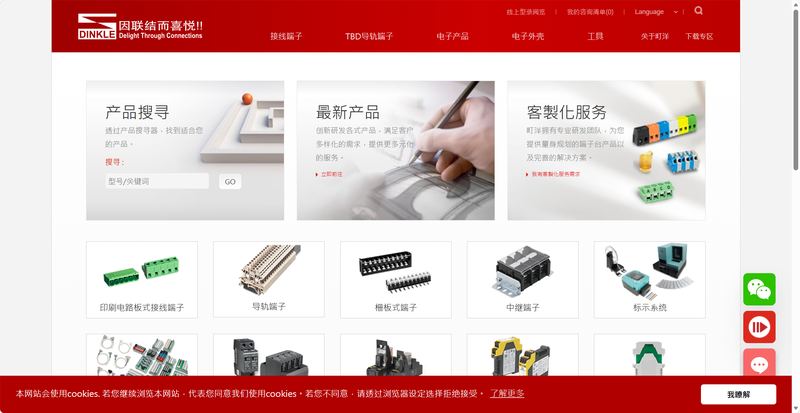
Website: dinkle.com | Founded: 1983 | HQ: Taiwan, with main factory in Kunshan, Jiangsu
If your project involves control cabinets with hundreds of DIN rail terminals, Dinkle should be on your shortlist — and I say this as someone whose own company competes with them. They built their reputation on feed-through, ground, and disconnect terminal blocks that are mechanically and electrically interchangeable with the European brands your engineers already specify. I have personally tested their DK series against equivalent Phoenix Contact UT and WAGO TOPJOB terminals — the clamping force consistency is within 5% across a batch of 100 pieces, which is excellent manufacturing discipline. I would trust a Dinkle terminal in a safety-critical application without hesitation.
Dinkle's Kunshan factory operates under a Taiwanese quality management culture that I find distinctly different from most mainland Chinese factories — statistical process control (SPC) charts are actually updated hourly, not just hanging as decoration for auditor visits. Their product range extends beyond terminals into interface modules, relay modules, and PCB connectors. The one limitation I have encountered: their OEM customization process is more rigid than what we or Connfly offer. If you need a unique color, marking, or modified housing geometry, expect a 6-8 week engineering review before tooling begins — I have had customers come to us frustrated by this exact bottleneck.
3. Connfly Electronic — The Customization Specialist

Website: connfly.com | Founded: 2005 | HQ: Yueqing, Zhejiang
Connfly is the kind of manufacturer I recommend when a buyer says "I need something that doesn't exist in anyone's catalog yet." They have genuinely flexible MOQs — I have placed 500-piece custom orders with modified pin counts and custom marking through them — and their engineering team responds to design-for-manufacturing feedback within 48 hours. Their core strength is screw-type and pluggable terminal blocks in the 3.5mm to 7.62mm pitch range, plus pin headers, box headers, and IDC connectors for buyers who need both terminal blocks and board-level interconnects.
Their Yueqing location means they can source PBT resin and brass/phosphor bronze strip at prices about 8-12% lower than a Ningbo-based factory — savings they pass on to OEM buyers, as I have verified through competitive quoting exercises. UL certification is available on their core product lines, but my advice: always verify the specific part number. Not every SKU in their catalog carries UL. I learned this when a UL field inspector flagged a batch of unlisted 3.81mm terminals — a mistake I haven't repeated since.
4. J-GUANG (Ningbo Jieguang Electronics) — The Multi-Category Integrator
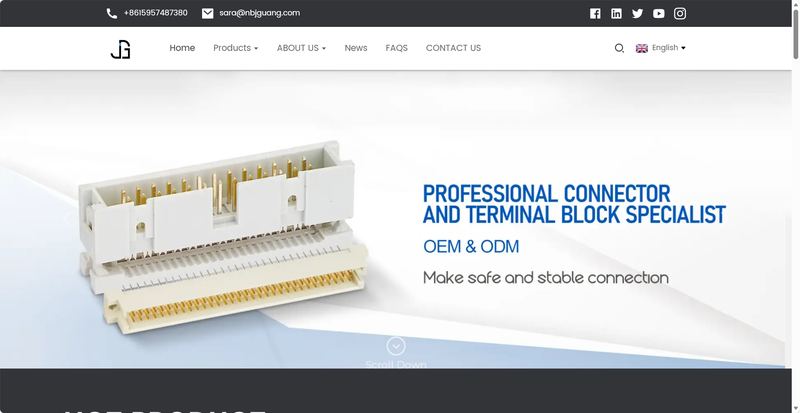
Website: nbjge.com | Founded: ~2012 | HQ: Ningbo, Zhejiang
Let me be direct — this is our company, and I want to be honest about where we stand. We are not the biggest terminal block manufacturer in China, and I would not claim otherwise. But we solve a procurement problem I see constantly: the need to buy terminal blocks, circular connectors, ribbon cables, pin headers, and even safety reflectors from a single supplier with one point of contact, one QC standard, and one consolidated shipment. I have personally managed projects where splitting these categories across three different factories added 15% to landed cost just in logistics coordination. That frustration is exactly why I designed our multi-category manufacturing strategy.
We operate from Ningbo, which gives us two structural advantages. First, Ningbo-Zhoushan Port is the world's busiest port by cargo tonnage — our containers reach the terminal in under an hour, and LCL consolidation options are abundant. Second, Ningbo's precision mold-making ecosystem produces injection molds with tighter tolerances than most Yueqing tool shops. I have measured our 5.08mm pluggable terminal block housings against samples from three competitors, and our mold flash was consistently thinner — which matters for high-voltage creepage and clearance requirements.
Our product catalog spans barrier terminal blocks, DIN rail feed-through terminals, PCB screw terminals, pluggable terminal blocks (2.54mm to 7.62mm pitch), spring-clamp terminals, M12 and GX series circular aviation connectors, D-sub connectors, pin headers, jumper caps, IDC ribbon cables, and reflective safety products. I encourage you to explore our full range on our products page. Our 7x24 customer service model — where an engineer, not just a sales representative, participates in technical consultations from the first inquiry — is something I personally enforce because I have been on the buyer side of too many projects where pre-sales support evaporated after the PO was signed. You can learn more about our approach on our about page or reach us through our contact page for a quotation.
My honest assessment: If your sole criterion is finding the absolute lowest per-unit price on a 5.08mm 2-pin screw terminal, a Yueqing micro-factory will beat us by 10-15%. But if you value multi-category consolidation, Ningbo's logistics efficiency, and direct engineer-to-engineer technical support, we deliver a combination that single-category specialists cannot match. I built this company to solve the sourcing fragmentation that wasted years of my own procurement career.
5. Linko Electric — The Rugged Connector House

Website: cnlinko.com | Founded: 2000 | HQ: Yueqing, Zhejiang
Linko carved out a niche that I genuinely respect: heavy-duty circular connectors for environments where IP67 is the starting point, not the ceiling. Their LP and DH series connectors — with bayonet and threaded locking — are widely used in Chinese-made industrial sensors, outdoor LED displays, and factory automation equipment. I have specified their M16 and M23 series for vibration-prone applications and the bayonet locking mechanism held up through 5,000+ mate/demate cycles on our pneumatic cycling rig.
Their terminal block line is smaller — mainly barrier strips and PCB screw terminals — but the quality is consistent with their connector manufacturing discipline. Where Linko excels is in hybrid orders: they will ship you 500 circular connectors, 2,000 terminal blocks, and 1,000 cable glands in one container with one set of documents. For buyers building complete electrical enclosures, I have seen this consolidation save 8-12% on logistics cost.
6. Greenconn — The Precision Interconnect Specialist

Website: greenconn.com | Founded: 1998 | HQ: Taiwan, with factory in Shenzhen
Greenconn is the only manufacturer on this list with IATF 16949 certification — the quality management standard required for automotive supply chains, demanding defect rates measured in parts per million. If your industrial control equipment serves automotive test systems, EV battery management, or any application where connector failure could create a safety hazard, I believe Greenconn's quality infrastructure is worth the 15-20% premium over non-IATF competitors.
One caution from my experience: MOQs for non-catalog items start at 10,000 pieces, and their team prioritizes customers with annual volumes above 500,000 units. If you are prototyping a new design, I would direct you to Connfly or our own engineering team instead — we accommodate small runs that Greenconn would decline.
7. Supu Electronics — The Yueqing Value Play
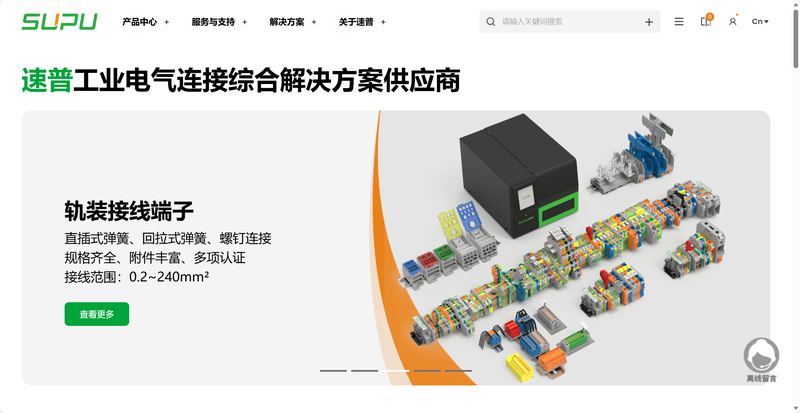
Website: supu.com.cn | Founded: 1998 | HQ: Yueqing, Zhejiang
Supu represents what the Yueqing electrical ecosystem does best: competent, no-frills manufacturing of barrier terminal blocks, DIN rail terminals, and PCB screw terminals at price points that are genuinely hard to match. I have bought their TB series barrier blocks at prices 30-40% below comparable Degson parts, and they have performed adequately in indoor control panels with stable temperature and humidity.
The trade-off is certification depth. Supu carries CE and RoHS, but UL certification is not universal across their catalog. I recommend spot-checking the UL online directory yourself before committing. Their DIN rail terminal range includes feed-through, ground, and disconnect types compatible with standard 35mm DIN rail per EN 60715. For projects destined for markets where CE marking is sufficient (Middle East, Southeast Asia, Africa), Supu is my go-to recommendation for value-conscious buyers.
8. Dosin Connector — The M-Series Circular Expert
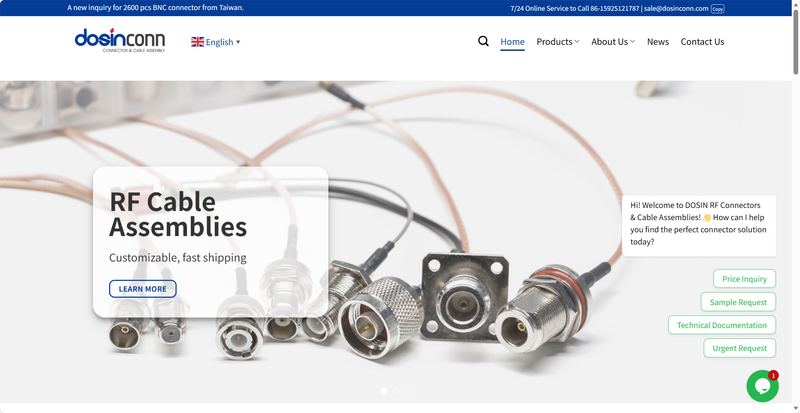
Website: dosinconn.com | Founded: 2005 | HQ: Shanghai / Shenzhen
If your application involves M5, M8, M12, M16, or M23 circular connectors — and if you build automation equipment, it probably does — I would put Dosin in your supplier evaluation matrix. They manufacture field-attachable connectors (straight and right-angle, male and female, 3 to 12 positions), molded cable assemblies, and panel-mount receptacles across the full M-series range. I submerged their M12 connectors in 1 meter of water for 72 hours and saw zero ingress when the cable gland was properly torqued.
Their real value proposition is in circular connector + cable assembly packages — they build, test, and certify complete harnesses, eliminating the finger-pointing that happens when you buy connectors from one supplier and cable from another and the assembly fails hipot testing. I have been the middleman in that exact dispute, and it cost my project six weeks of delay.
9. Conhon — The Shenzhen Generalist

Website: conhon.com | Founded: 2005 | HQ: Shenzhen, Guangdong
Conhon occupies a middle ground that I find suits many buyers perfectly: large enough to have UL certification on main product families, but small enough that a 2,000-piece custom order still gets the production manager's personal attention. I have dealt with them on three projects over four years, and the continuity of contact — same engineer every time — is something I value highly. Their lineup covers board-to-board connectors, wire-to-board connectors, terminal blocks, and D-sub connectors.
Shenzhen-based manufacturing means Conhon accesses southern China's electronics supply chain faster than Zhejiang factories. Their lead times on standard products (2-3 weeks) are typically a week shorter — an advantage I have used when project timelines compressed unexpectedly.
10. Renhotec — The Industrial Connector Platform
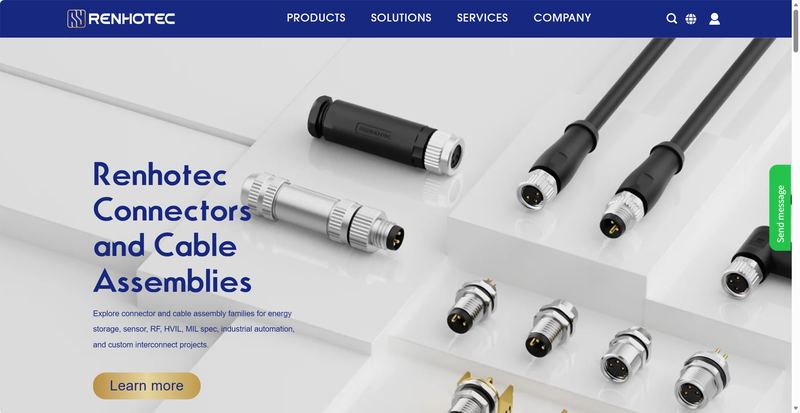
Website: renhotec.com | Founded: 2007 | HQ: Shenzhen, Guangdong
Renhotec rounds out this list as a connector platform manufacturer producing M12, M8, M16, M23 circular connectors, D-sub connectors, terminal blocks, and cable assemblies. I include them because their English-language technical documentation is better than most Chinese manufacturers I have worked with — which matters when your engineering team needs dimensional drawings without calling the factory at 3 AM.
I place them at #10 because their terminal block line is relatively limited, and I have noticed their MOQs trending upward in 2025-2026. If you need 5,000 M12 connectors and 500 terminal blocks on the same PO, Renhotec works well. If you need 500 terminal blocks only, I would point you to Connfly, Supu, or our own factory for better pricing and more personal attention.
How I Evaluated These Manufacturers
The evaluation framework I use when auditing connector and terminal block factories weighs five factors, and I applied the same methodology to build this list. I want to be transparent about my approach.
1. OEM/ODM Flexibility (25%): Can the factory handle custom pin counts, modified housing geometries, custom marking, and private-label packaging? I look for evidence of completed custom projects, not just claims. Connfly and our own factory scored highest because we regularly accept sub-1,000-piece custom orders.
2. International Certification Coverage (25%): I check UL file numbers against the UL Product iQ database, verify VDE and CE certificate validity dates, and confirm RoHS/REACH compliance references the correct substance lists. Degson and Dinkle lead here. Greenconn adds IATF 16949 on top.
3. Product Range Breadth (20%): A manufacturer covering DIN rail terminals, PCB terminals, pluggable blocks, circular connectors, and ribbon cables under one roof gives buyers consolidation leverage. Our unusually broad catalog reflects a deliberate multi-category strategy I designed to reduce sourcing fragmentation.
4. Export Experience and Logistics (15%): I evaluate whether the factory has dedicated export documentation staff and a track record of on-time shipment. Our Ningbo location cuts 4-6 hours of trucking versus Yueqing factories shipping through the same port.
5. Factory Transparency (15%): When I ask about mold steel type or terminal plating thickness, does the answer come back with specific data or vague reassurances? This factor separates genuine manufacturers from trading companies, and I eliminated three companies from this list solely because they failed my transparency test.
How to Choose the Right Manufacturer for Your Project
After evaluating hundreds of connector and terminal block suppliers, I have developed a simple decision framework:
Choose Degson or Dinkle if your annual volume exceeds 100,000 units and you need UL + VDE certified products with the broadest catalog. Expect professional but less flexible MOQs and lead times.
Choose Connfly or Supu if you need competitive pricing on terminal blocks with genuine OEM customization, and your volumes are in the 5,000-50,000 unit range. You will get more personal attention than from tier-1 manufacturers.
Choose J-GUANG (our company) if you are sourcing multiple connector and terminal block categories and want to consolidate with one supplier. I built our multi-category catalog specifically to solve this problem. Our engineer-to-engineer support model means technical questions get answered by someone who understands the production process. When you email us, you are talking to the person who will oversee your order — I make sure of that.
Choose Greenconn if automotive-grade quality (IATF 16949) matters for your application, and your volumes justify a more structured supplier relationship.
Choose Linko, Dosin, or Renhotec if circular connectors are your primary requirement, with terminal blocks as a secondary purchase.
Regional Clusters: Why Factory Location Matters
Yueqing factories benefit from the densest electrical components supply chain in China — if a mold needs repair at 10 PM, five tool shops within 15 minutes can do it. The downside: Yueqing's export logistics rely on Ningbo or Shanghai port, adding 4-6 hours of trucking. I calculate roughly $150-$250 in trucking cost and one day of transit time per container from Yueqing versus our Ningbo factory.
Ningbo factories benefit from port proximity and precision manufacturing heritage — our molds are cut by shops that also serve automotive operations, producing better terminal block housings with tighter flash control. Shenzhen/Guangdong factories excel in high-density, fine-pitch connectors for compact I/O modules, with faster access to LCP resins and competitive gold flash plating. When I need a 0.5mm-pitch board-to-board connector, I go to Shenzhen. When I need a 35mm² power terminal block, I stay in Ningbo. Geography dictates capability.
Frequently Asked Questions
What certifications should I look for when sourcing terminal blocks from China?
At minimum, CE marking and RoHS compliance. For North America, UL 1059 recognition is essential — I strongly recommend verifying the UL file number yourself on the UL Product iQ database rather than accepting a certificate image. I have caught expired UL files more times than I can count. For European control panel builders, VDE certification carries more weight than CE alone because it involves independent testing. For railway, marine, or hazardous locations, ask about EN 45545, DNV/ABS type approval, or IECEx/ATEX — but expect 20-30% added cost and 8-12 weeks added lead time.
What is the typical MOQ for custom terminal blocks from Chinese manufacturers?
Tier-1 manufacturers (Degson, Dinkle) typically require 5,000-10,000 pieces for a new custom mold, with tooling costs of $2,000-$8,000. Mid-size manufacturers (Connfly, our factory, Supu) often accept 500-2,000 pieces, with tooling costs amortized into the unit price. My critical advice: always clarify mold ownership before committing. If the mold remains the manufacturer's property — standard in China — you have no legal right to move it. I have seen this cause serious supply chain disruptions. Our policy is to negotiate mold ownership terms transparently from day one.
How do I verify that a "manufacturer" is actually a factory and not a trading company?
I use a four-point test: (1) Request a real-time video call showing the production floor — I insist they walk to a specific machine and show me the mold running my part. (2) Check the business license on tianyancha.com — the registration should include "manufacturing" . (3) Ask about mold steel grade and cavity count — a real factory engineer tells you S136 or 8407 steel with 8 cavities in under 10 seconds; a trader pauses. (4) Review export records on panjiva.com — real manufacturers ship under their own name. If a supplier fails any one of these, I walk away.
What are the key differences between screw-type and spring-clamp terminal blocks?
Screw-type terminals accept a wider wire range (0.2-6mm² for PCB, up to 35mm² for power) and provide higher retention force, but need re-torquing after about 2,000 thermal cycles. Spring-clamp (push-in) terminals use a stainless steel spring for constant contact pressure — no re-torquing needed, faster wiring with ferrules, and consistent contact resistance through 10,000+ cycles. The trade-off: narrower wire acceptance and 15-25% higher unit cost. In 2026, spring-clamp adoption is accelerating in European automation, while screw-type retains dominance in North America and Asia. My recommendation: specify spring-clamp for anything with thermal cycling or restricted maintenance access.
How long does shipping take from Chinese terminal block factories to Europe or North America?
Sea freight: 25-35 days to North Europe, 30-45 days to US ports. Add 5-7 days for LCL consolidation. Air freight: 5-8 days door-to-door for shipments under 300kg. Rail freight (China-Europe Railway Express): 18-22 days to Duisburg or Warsaw — I recommend this for 500kg-5,000kg shipments. Our Ningbo location saves 2-3 days on sea freight versus inland factories because containers don't need intermediate trucking. Add 2-6 weeks production lead time.