


TL;DR: EN 13356 defines the minimum retroreflection performance for non-powered pedestrian safety reflectors worn on the body. Finland legally requires pedestrians to wear reflectors on unlit roads; Sweden, Norway, and Denmark strongly expect them. Nordic retailers will reject uncertified product. Custom die-cut reflectors in brand-specific shapes can achieve EN 13356 compliance provided the reflective sheeting meets the standard's coefficient-of-retroreflection thresholds and durability tests. Brands entering Scandinavian markets should begin reflector sourcing 12 weeks before ship date and insist on lab-tested compliance documentation. Explore NBjge's OEM reflector catalog for certified, customizable options.
1. The Nordic Visibility Problem: Darkness, Motion, and Driver Reaction Time
Scandinavia's high-latitude winters produce daily darkness windows that swallow most after-work running hours. In Stockholm, civil twilight ends before 3:00 PM on the winter solstice. In Tromso, the polar night persists for weeks. Runners who depend on daylight for visibility face a structural mismatch between their training schedule and available light.
Running apparel design in these markets is therefore inseparable from visibility engineering. A jacket that performs brilliantly in a wind tunnel but vanishes under headlights fails the most basic use case for its target customer. The design challenge is not simply to add reflective tape -- it is to integrate certified retroreflective elements that survive the rigors of Nordic winter training: sub-zero temperatures, wet snow, abrasive ice crystals, and repeated laundering. This is where the EN 13356 standard becomes the definitive reference for product teams.
Nordic countries consistently rank among the world's top running nations per capita. Finland, Sweden, and Norway collectively field millions of recreational runners who train year-round. These consumers are educated about reflective technology -- many grew up wearing personal safety reflectors as children and continue the practice as adults. They recognize the difference between a genuine EN 13356 certified reflector and a decorative metallic print that glows under flash photography but offers negligible retroreflection under real headlight geometry.
Car headlights illuminate a road surface roughly 60-100 meters ahead under low-beam conditions. At 70 km/h, a driver needs approximately 35 meters to stop. A pedestrian wearing dark athletic clothing becomes detectable at roughly 25-30 meters -- dangerously close to the braking envelope. A single pedestrian safety reflector extends that detection distance to 150 meters or more, giving the driver over seven seconds of additional reaction time.
For running gear brands, this is not a marginal feature. It is a product safety requirement that directly influences whether a customer survives a winter training run. Nordic consumers understand this intuitively, and they expect their apparel to address it.
2. What EN 13356 Actually Specifies
EN 13356 is a European harmonized standard titled "Protective clothing -- Visibility accessories for non-professional use -- Test methods and requirements." It applies to non-powered, retroreflective devices intended to be worn by pedestrians, cyclists, and other vulnerable road users.
The standard defines performance in three categories:
- Retroreflection coefficient (RA): Measured in cd/lux·m² at defined observation and entrance angles. White or silver sheeting must achieve RA values typically above 300 cd/lux·m² at the 0.2° observation / 5° entrance angle geometry. Colored materials have proportionally lower but still codified thresholds.
- Colorimetric requirements: Chromaticity coordinates ensure that the reflected light appears white, yellow, or red-orange -- the colors most perceptible to the human visual system under scotopic and mesopic conditions.
- Durability: Reflectors must maintain minimum RA values after exposure to abrasion, temperature cycling between -20°C and +50°C, and simulated rainfall. This is the clause that matters most for Nordic winter running gear, where reflectors endure repeated flexing, sweat contact, snow abrasion, and sub-zero storage.
Products that pass all three categories earn the right to bear the EN 13356 marking and the familiar retroreflective triangle pictogram. Without it, a reflector is just a decorative element -- visually bright in controlled conditions but unproven under real-world safety-critical scenarios.
Importantly, EN 13356 tests the finished reflector assembly, not just the raw sheeting material. This means that adhesive backing, edge sealing, protective overlays, and the substrate to which the reflector is applied all influence whether the final product passes. A brand cannot rely on a material datasheet alone; it must obtain test reports for the specific product configuration that will ship in the garment.
3. Finnish Law and the Broader Nordic Market Expectation
Finland's Road Traffic Act (Tieliikennelaki, Section 69) mandates that pedestrians walking on roads without street lighting between sunset and sunrise must wear a reflector. Enforcement is real: police have issued guidance campaigns for decades, and Finnish consumers treat reflectors as an essential accessory, not optional gear. The cultural penetration is near-universal -- it is common to see Finnish pedestrians wearing multiple reflectors simultaneously on different body zones.
Sweden, Norway, and Denmark do not impose a legal obligation on adult pedestrians, but market practice is functionally equivalent. Major Nordic outdoor and running retailers -- including Intersport Scandinavia, Stadium, XXL, and Karhu's Finnish distribution network -- require EN 13356 compliance as a condition of shelf placement. A brand that enters the market without certified reflectors faces immediate rejection by buyers who know their customer base expects proof of performance.
This dynamic creates a clear procurement rule: if your running apparel ships to Nordic markets, every reflective component must carry EN 13356 certification. Non-negotiable.
4. How Reflectors Work: Microprismatic vs. Glass Bead Technologies
Two retroreflective technologies dominate the pedestrian safety reflector market:
Glass Bead Sheeting
Tiny glass spheres (typically 40-90 microns in diameter) are embedded in a polymer layer backed with a metallic mirror coating. Incoming light enters each bead, refracts toward the focal point, reflects off the back coating, and returns along the incident path. Glass bead sheeting is cost-effective, flexible, and widely available. It is the technology most commonly found in sew-on and iron-on reflective tapes for apparel.
Glass bead technology has served the safety industry for decades and remains the workhorse of traffic signage and high-visibility workwear. For running apparel, however, it presents limitations. The metallic mirror layer adds rigidity, and the bead-matrix composite is thicker per unit of retroreflective performance. When a brand needs a thin, flexible, garment-integrated reflector that conforms to curved body surfaces, glass bead sheeting often requires larger surface areas to achieve the same brightness as a microprismatic alternative.
Microprismatic Sheeting
Precision-engineered cube-corner prisms molded into a polycarbonate or acrylic film achieve higher retroreflection efficiency per unit area. Microprismatic reflectors deliver RA values 2-4 times higher than glass bead equivalents at comparable thicknesses. They also maintain performance at wider entrance angles, which is critical when a runner's torso rotates through multiple planes during stride.
For Nordic running gear applications, microprismatic sheeting offers a decisive advantage: higher brightness at thinner gauge means reflectors can be integrated into apparel without adding bulk or stiffness. Custom die-cut shapes from microprismatic film maintain flexibility and conform to curved surfaces like sleeves, shoulders, and calf wraps.
Why Technology Choice Matters for Certification
Not all microprismatic sheeting automatically passes EN 13356. The standard tests the finished reflector assembly -- including adhesive backing, edge sealing, and any protective overlay -- not just the raw sheeting. Brands must insist on test reports for the complete product, not material datasheets alone.
5. Custom-Shape Reflectors: Design Freedom Within Compliance Boundaries
Running apparel brands differentiate through silhouette, color, and graphic identity. A generic rectangular reflector strip sewn onto a jacket back panel communicates safety but not brand. Custom-shape reflectors solve this tension by combining brand expression with certified performance.
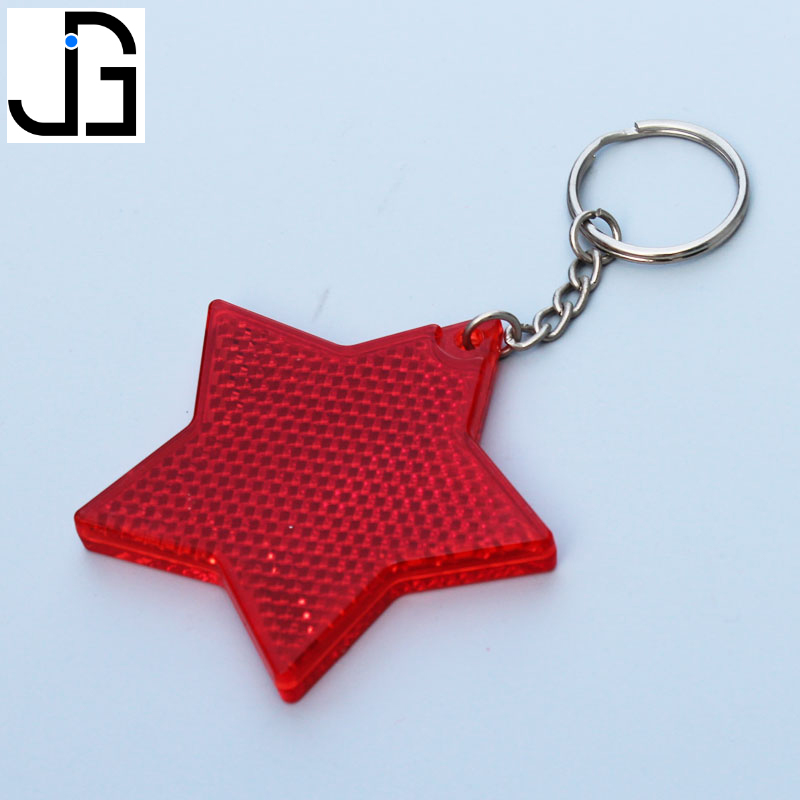
Modern die-cutting processes can produce virtually any two-dimensional shape from EN 13356-certified sheeting:
- Logomarks: A brand's icon rendered in retroreflective material, applied to the chest, back yoke, or sleeve.
- Geometric accents: Angular chevrons, mountain silhouettes, or abstract shapes that align with a brand's design language.
- Functional outlines: Reflective piping that follows seam lines, zipper tape, or ventilation panel boundaries.
- Runners' silhouettes: Human-figure shapes that serve both as a brand motif and a high-visibility indicator.
- Flag and icon motifs: Nordic cross patterns, national flag elements, or sport-specific icons (ski poles, trail markers) that resonate with Scandinavian consumers.
- Seasonal or limited-edition artwork: Collectible reflector shapes tied to specific events such as the Helsinki City Running Day, the Stockholm Marathon, or the Oslo Winter Run.
The creative potential extends beyond standalone reflector patches. Brands increasingly integrate reflective elements into the overall garment architecture -- positioning custom-shape reflectors at biomechanically strategic points where they capture headlight beams most effectively during the running gait cycle. The outer calf, the upper back yoke, and the shoulder blades are the three highest-visibility zones on a moving runner, as these areas face the approaching vehicle for the longest duration during each stride. A well-designed reflective system places larger reflectors on these zones and smaller accent reflectors on the sleeves and side panels to create a recognizable human silhouette from every approach angle.
The compliance boundary is straightforward: the total retroreflective surface area must meet the minimum effective area defined by EN 13356, and the sheeting material must independently achieve the required RA values. A die-cut logo with 40 cm² of certified microprismatic surface performs identically to a 40 cm² rectangle of the same material -- geometry does not degrade retroreflection as long as the prisms remain intact through the cutting process.
Edge quality during die-cutting is therefore a production-critical variable. Laser-cutting and steel-rule die-cutting both produce clean edges that do not delaminate or craze the prism structure. NBjge's production line uses precision steel-rule dies calibrated for microprismatic films, ensuring that custom shapes maintain certified performance from first article to final shipment.
6. OEM Specification Checklist for Running Gear Brands
When sourcing EN 13356 compliant reflectors for a Nordic winter running collection, product development teams should specify the following at the RFQ stage:
| Parameter | Recommended Specification | Notes |
|---|---|---|
| Certification standard | EN 13356:2001+A1:2007 (current harmonized version) | Confirm the test report references the correct standard edition |
| Minimum RA (white/silver, 0.2°/5°) | ≥ 330 cd/lux·m² | Exceeding the minimum provides a safety margin for wear-degraded performance |
| Temperature range | -30°C to +60°C operational | Extends beyond standard requirement for extreme Nordic conditions |
| Color options | White, fluorescent yellow, fluorescent orange | Fluorescent colors add daytime visibility but verify chromaticity per EN 13356 Table 1 |
| Backing adhesive | Textile-grade heat-seal or pressure-sensitive adhesive rated to -30°C | Must pass EN 13356 durability tests after application to fabric |
| Minimum reflective area per unit | ≥ 15 cm² | Many Nordic brands target 20-50 cm² per reflector placement for enhanced visibility |
| Shape complexity | Custom die-cut to brand artwork | Provide vector artwork (.ai or .eps); minimum internal feature width 2mm |
| Wash durability | ≥ 25 domestic wash cycles at 40°C without >15% RA degradation | Critical for apparel-integrated reflectors; request wash test data separately |
Enclosing this checklist in your initial RFQ signals to the supplier that you understand the standard and expect verifiable compliance -- not just a marketing claim.
7. The Business Case: Why Certified Reflectors Are Not a Cost Center
Sourcing managers sometimes treat reflectors as line-item accessories -- minor trim to be minimized for margin. This framing is backwards for Nordic markets.
Retailer gatekeeping: As noted above, Nordic retailers enforce EN 13356 compliance as a listing prerequisite. Non-compliant products do not reach the shelf. The cost of a certification test report -- typically a few hundred euros through an accredited lab -- is trivial compared to the lost revenue of a rejected shipment.
Brand trust: Nordic consumers are among the world's most safety-conscious outdoor athletes. The EN 13356 mark on a running jacket is a trust signal comparable to CE marking on electronics. It communicates that the brand has invested in verifiable safety rather than decorative elements.
Consumer willingness to pay: Multiple Nordic market surveys indicate that runners rank visibility among their top three purchasing criteria for winter outdoor apparel, alongside thermal insulation and moisture management. Reflectors are not perceived as a cost add-on but as a core functional feature. Brands that communicate EN 13356 compliance in their product storytelling and hangtag descriptions consistently report higher conversion rates in the October-to-March retail window compared to competitors that treat reflective elements as minor trim.
Liability reduction: In the event of a road traffic incident involving a runner wearing the brand's apparel, the presence or absence of certified reflectors becomes a material factor in product liability analysis. Certified reflectors provide documented evidence that the brand met the applicable safety standard.
Per-unit cost is marginal: Custom die-cut EN 13356 reflectors from a supplier like NBjge typically add less than EUR 0.15-0.40 per unit at MOQs of 1,000+. On a running jacket retailing for EUR 120-200, the reflector cost is a rounding error that delivers outsized safety and commercial value.
8. Sourcing Process: From Artwork to Certified Production
A typical OEM workflow for custom EN 13356 reflectors follows this sequence:
- Design briefing: The brand provides vector artwork of the desired shape, specifying dimensions, color, and placement on the garment.
- Material selection: The reflector manufacturer recommends microprismatic sheeting grade based on the application (sew-on, heat-transfer, adhesive patch) and environmental requirements.
- Prototype die-cut and sampling: Steel-rule dies are fabricated and sample reflectors are produced. The brand evaluates fit, hand-feel, and visual quality on garment prototypes.
- EN 13356 testing: Finished samples are submitted to an accredited laboratory for retroreflection, colorimetry, and durability testing. Turnaround is typically 2-4 weeks.
- Production approval: Upon passing test results, the brand approves the specification. The reflector manufacturer initiates bulk production with in-line RA spot-checks.
- Shipment and QC documentation: Each production lot ships with a certificate of conformity referencing the EN 13356 test report, along with dimensional and visual inspection records.
Throughout this process, communication discipline between the brand and the reflector supplier is essential. Small deviations in adhesive formulation, die sharpness, or sheeting batch can affect final retroreflection values. The most reliable OEM relationships establish a product specification document that locks down every variable -- from sheeting manufacturer and grade to adhesive type, die-cut tolerance, and packaging method -- and references the original EN 13356 test report as the acceptance baseline.
It is also worth noting that EN 13356 certification attaches to the finished product configuration. If a brand changes the reflector's dimensions, color, backing adhesive, or applied substrate after the initial test, the product may require re-testing. Product teams should treat the reflector specification as a controlled document, with any change triggering a review against the existing certification scope.
NBjge supports this full workflow from its Ningbo production facility, which has supplied retroreflective products to European safety equipment brands for over a decade. The company maintains EN 13356 test reports for its standard sheeting portfolio and coordinates new test submissions for custom shapes as part of the OEM onboarding process.
Brands beginning a Nordic winter running collection should initiate reflector sourcing at least 12 weeks before target ship date to allow for die fabrication, sampling, testing, and production lead time.
Frequently Asked Questions
What is the EN 13356 standard for pedestrian safety reflectors?
EN 13356 is a European harmonized standard that specifies performance requirements for non-powered personal safety reflectors intended to be worn by pedestrians. It defines minimum retroreflection levels, durability criteria, and color specifications so that drivers can detect a person wearing the reflector at a safe distance. The current referenced edition is EN 13356:2001+A1:2007.
Is EN 13356 certification legally required in Nordic countries?
In Finland, wearing a reflector is legally required for pedestrians walking on roads without street lighting between sunset and sunrise. Sweden, Norway, and Denmark do not mandate reflectors by law for adults, but market expectations and retailer requirements strongly favor EN 13356 certified products. Major Nordic retailers will generally not stock uncertified personal reflectors.
What retroreflection values does EN 13356 require?
EN 13356 requires a minimum coefficient of retroreflection (RA, measured in cd/lux·m²) at specified observation and entrance angles. For white or silver materials, the standard typically demands RA values above 300 cd/lux·m² at 0.2° observation angle and 5° entrance angle. Colored materials have lower but still defined thresholds. The full test protocol also evaluates chromaticity and durability under abrasion, temperature, and moisture stress.
Can reflectors be customized into brand-specific shapes while maintaining EN 13356 compliance?
Yes. As long as the reflective surface area meets the minimum requirements and the retroreflective material achieves the specified RA values, custom die-cut shapes -- logos, silhouettes, abstract forms -- can carry EN 13356 certification. The key considerations are sufficient reflective area, clean die-cut edges that do not damage the prism structure, and using sheeting that has been tested per the standard in the final product configuration.
How do Nordic winter conditions affect reflector performance?
Sub-zero temperatures, moisture, snow abrasion, and UV exposure can degrade reflective materials over time. EN 13356 includes durability testing requirements such as temperature cycling (typically -20°C to +50°C) and abrasion resistance. Brands targeting extreme Nordic conditions should specify reflectors made from microprismatic sheeting rated beyond the standard minimum and request supplementary low-temperature performance data from the manufacturer.
What is the typical minimum order quantity for custom EN 13356 reflectors?
Minimum order quantities vary by manufacturer and shape complexity. At NBjge, custom-shape EN 13356 compliant reflectors can be produced from approximately 1,000 pieces per design, depending on the die-cut complexity and color options. Larger production runs reduce per-unit costs and provide access to a wider range of sheeting grades and finishes.